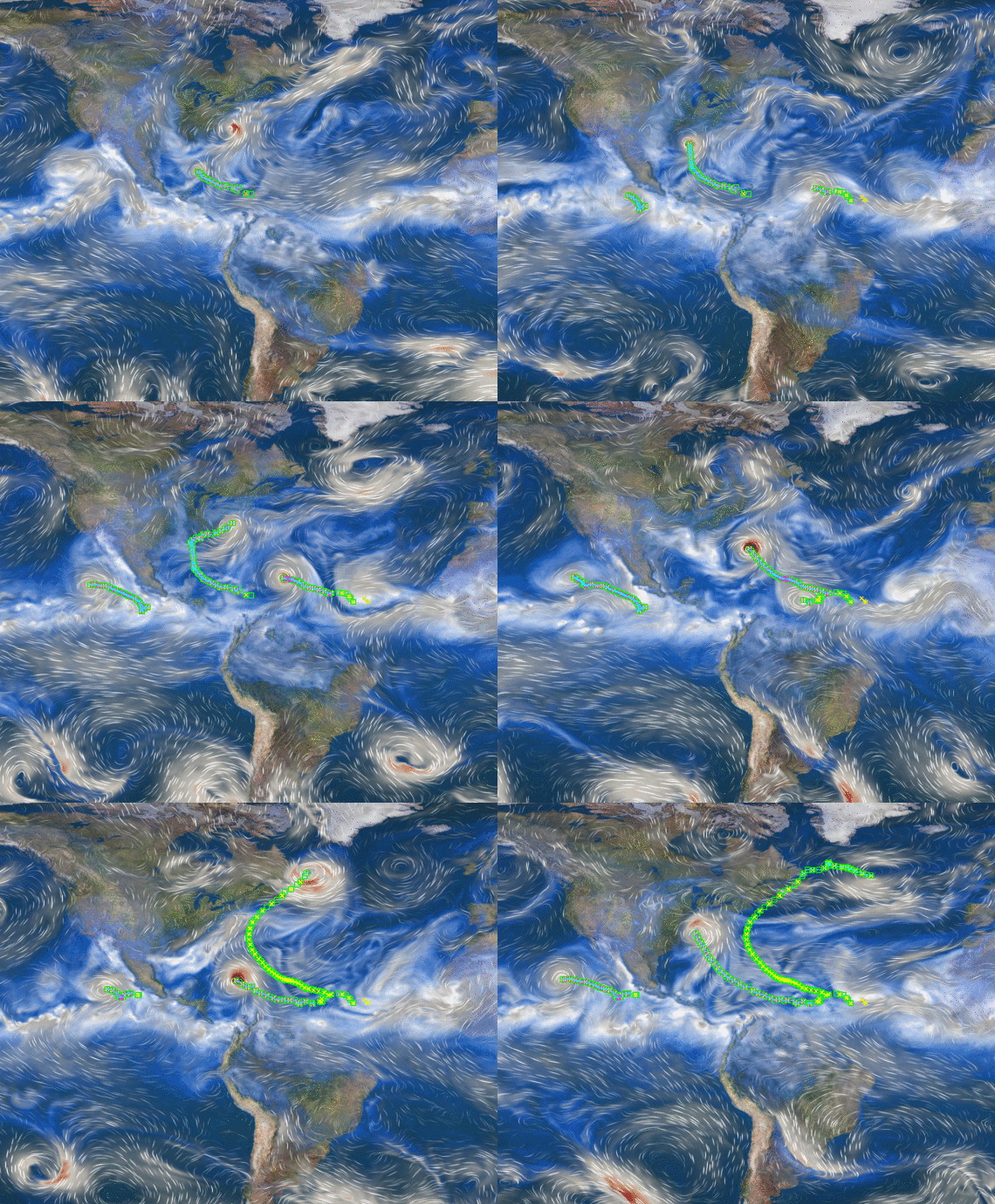
Fig. 1 Storm Tracks Generated by TECA
The TECA User’s Guide
TECA is a framework for parallel data analytics on large scale systems built by the DOE. TECA has algorithms for extreme event detection and post detection analysis. Written in C++, TECA uses MPI + X , where X is one of threads, OpenMP, or GPUs, to deliver state of the art performance and scaling. It’s Python bindings provide an easy way to script analysis suitable to any need and to develop new diagnostics.
Contents:
- Installation
- Command Line Applications
- Applying the Command Line Applications at Scale
- Considerations When Running at NERSC
- Common Command Line Options
- teca_metadata_probe
- teca_bayesian_ar_detect
- teca_integrated_vapor_transport
- teca_integrated_water_vapor
- teca_tc_detect
- teca_tc_trajectory
- teca_tc_wind_radii
- teca_potential_intensity
- teca_tc_stats
- teca_tc_trajectory_scalars
- teca_tc_wind_radii_stats
- teca_event_filter
- teca_temporal_reduction
- teca_deeplab_ar_detect
- teca_convert_table
- teca_cf_restripe
- teca_lapse_rate
- Python
- Development
- Bibliography